
Access to the city is an even greater challenge for women with disabilities, who remain invisible in society, despite being 26.5% of the country’s female population (IBGE, 2010). As well as having less access to the city (whether physical, attitudinal or communicational access), women with disabilities are more vulnerable to gender-based violence, both in the domestic environment and in public spaces.
Lesbian, bisexual, trans women and transvestites also face challenges in accessing the city because of their sexual orientation and gender identity. Discrimination and violence are still part of everyday life for many LGBTQIAP+ people in public and private spaces.
Religious intolerance and racism also affect people’s right to come and go, especially for women that belong to Afro-Brazilian religions.
A Women’s City has to be a friendly city for all ages, from children to the elderly. We are living the so-called longevity revolution along with the feminization of aging: by 2050, it is estimated that 31% of the population will be over 60 in Brazil. The majority will be female: there will be around 7 million more elderly women than men. The participation of elderly women will be increasingly decisive for Brazilian society and cities.
Anti-racist and anti-ableist city
INTERSECTIONALITY
The right to the city needs to be intersectional, in other words, it needs to fully consider the social factors that define each person and regulate their access to rights and opportunities, such as gender, ethnicity, race, territory, age, etc.
CIDADE 60+

More and more people are elderly in Brazil, but they don’t experience this stage of life in the same way. Depending on their race, gender, sexual orientation, among other factors, they tend to have more or fewer resources, possibilities and rights.


98%
ON THE STREET

64%
ON PUBLIC
TRANSPORT

80%
IN PUBLIC PLACES
LIKE PARKS AND SHOPPING MALLS

91%
ARE AFRAID TO WAIT
FOR PUBLIC TRANSPORT
LIKE PARKS AND SHOPPING MALLS
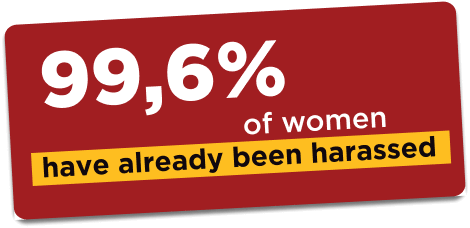
No moreCatcalling
In 2018, the Campaign “Chega de Fiu Fiu” (No more Catcalling) launched the documentary “Chega de Fiu Fiu” (No more Catcalling), which shows the daily harassment experienced by women in the cities:

